
After undergoing long renovations, the Chazen Museum of Art has reopened with both new and old pieces of art on full display for visitors. I was fortunate enough to be led on a tour of their new exhibit, Recollections: Exhibiting the Collection, which contains bite-sized features of the museum’s pieces that were moved to make way for the new displays upstairs. Recollections, like the rest of the museum, is completely free to the public and will be available until December 23rd, 2026. It is a special showcase as it details pieces that were acquired through previous events at the museum, with some features being gifts, purchases, and donations accumulated since the 1970s. As a result, Recollections captures the ongoing relationship between the art itself and the displays put together.
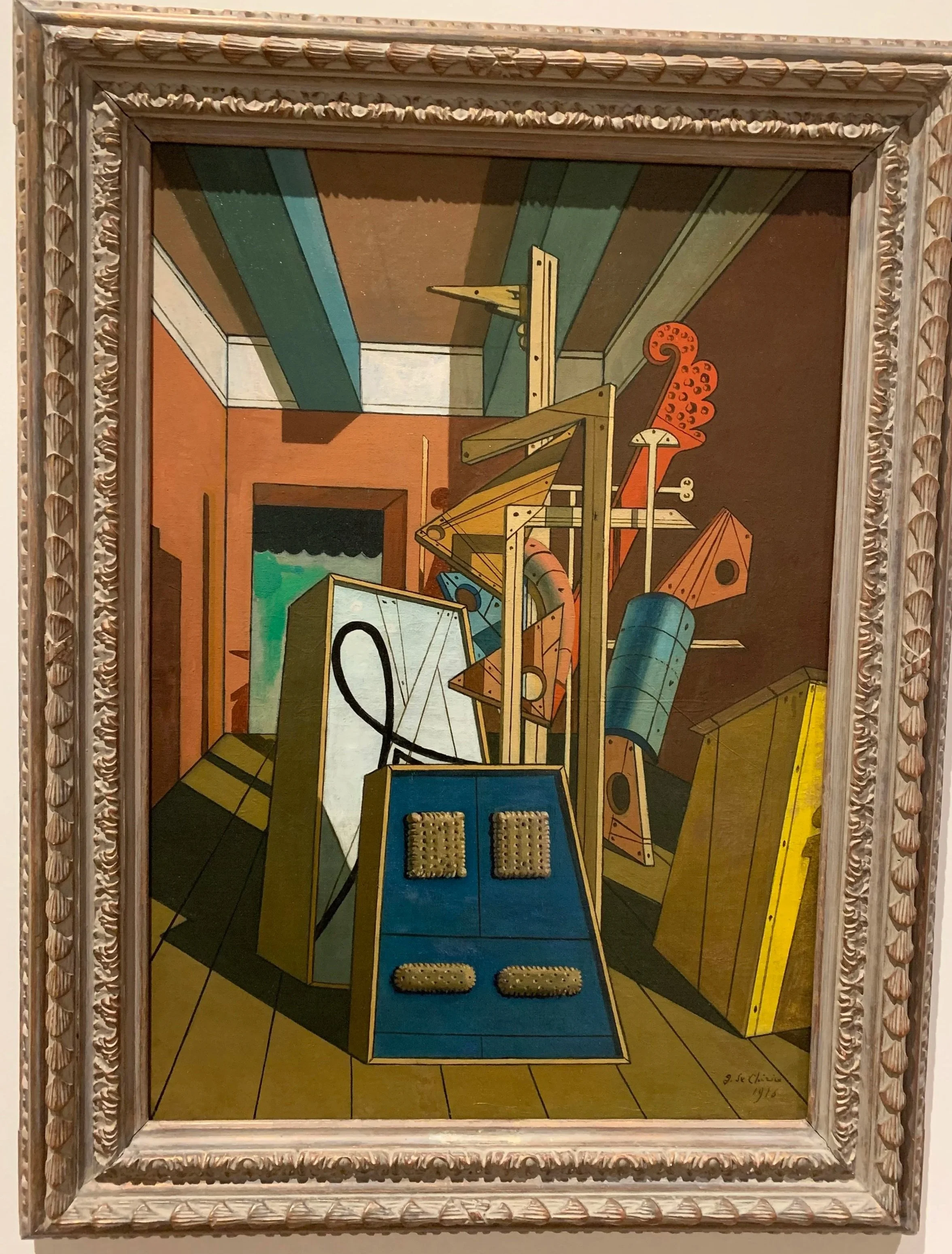
Giorgio de Chirico, Metaphysical Interior with Biscuits, 1950 (dated 1916)
Photo by Connor Kipp
Although these pieces have been a part of the collection and have been shown off in the past, that does not mean this exhibit is any less exciting. The staff has done a remarkable job in setting up the exhibit to breathe new life into these older pieces, creating an experience that is both fresh and nostalgic. Having gotten a chance to explore Recollections with a tour guide, I have decided to highlight a few of the featured pieces in order to show off why this hall is worth a visit to both new and old visitors.
Each person absorbs art in their own way. Our experiences and beliefs change how we see the world around us. My tour was led by a graduate student who specializes in art history and museums. He was a great resource for contextualizing the significance of each display, giving background info on both the pieces and the artists. For Metaphysical Interior with Biscuits, he told a story about how the artist, Giorgio de Chirico, painted this while he was in a hospital ward for a prolonged period of time. I then interpreted it to represent the cramped feeling of his mental health deteriorating in an enclosed space. That was when the rug was pulled out from under us. My tour guide had retold a false story created by the painter. This was not made while he was in the hospital; it was made decades later, but the artist claimed it to be an older piece as a selling point. Personally, I find it fascinating how these details can impact our understanding of an image. I now wonder about the authenticity of other artwork I’ve seen. How much can my perception change based on the slighting of a minute detail? This piece demonstrates how easily misleading interpretations can be. No matter what the message is here, the painting still provides an interesting challenge for the viewer to decipher, a quality that I value much in art.
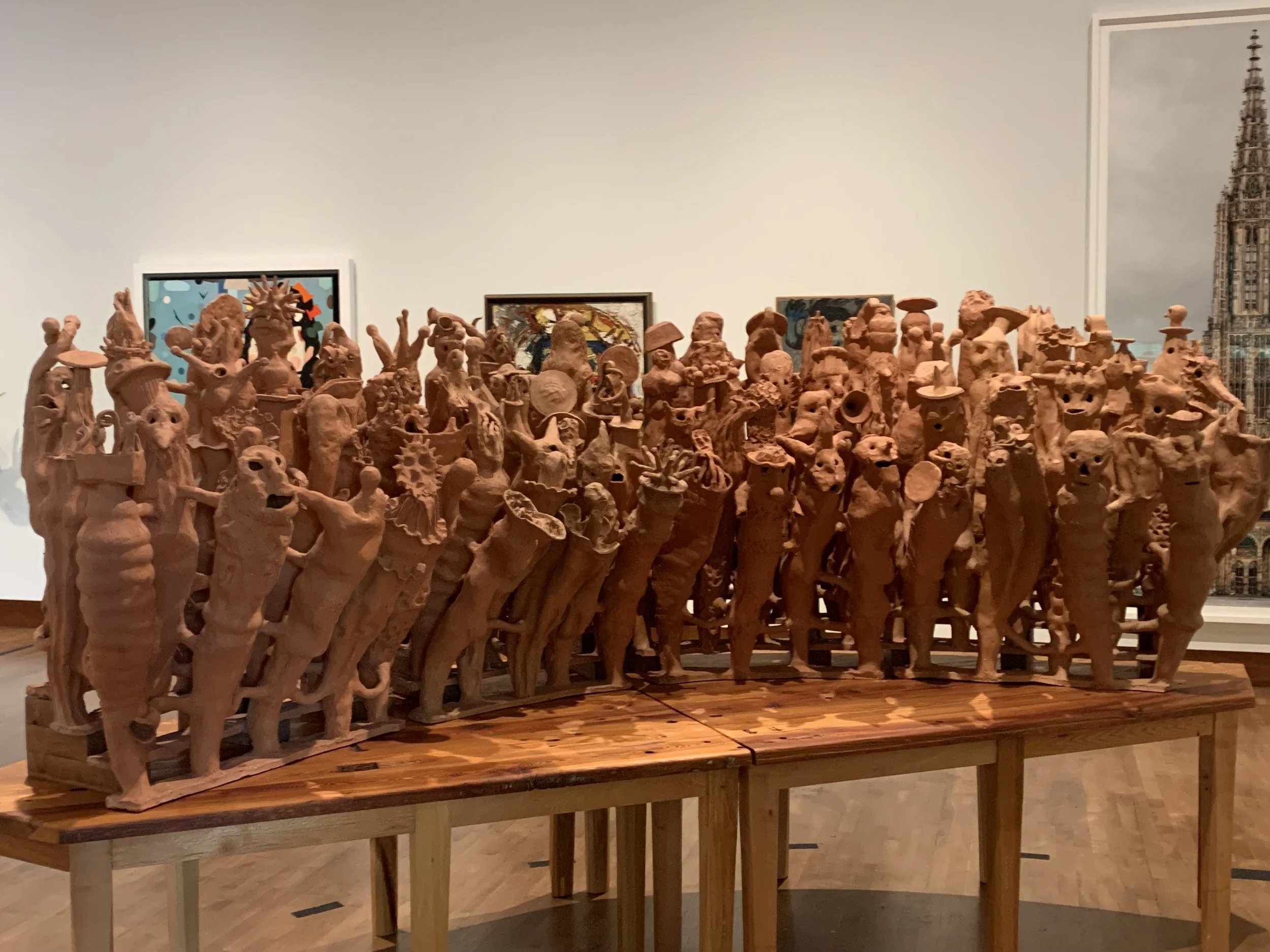
Arnold Zimmerman, The Fool’s Congress, 1998-99
Photo by Connor Kipp
For those who are curious about art outside of paintings, I am happy to write that Recollections has a wide variety of pieces that push the boundaries into the third dimension. This section is dedicated to what I consider to be the most bizarre and surprising of the works within this display. Being on the first floor through an open archway in the Chazen’s lobby, before even stepping into the exhibition, a collection of clay figures can be seen poking their ridiculous heads outward, as if beckoning those walking by to try their luck inside. It contains over 80 specially handmade figures tied together, all jumping out in crazy poses. They almost feel like gatekeepers requiring you to pass through them before you can enjoy the rest of the collection. Though he was unsure of the process, our guide made sure to highlight how challenging moving and cleaning this massive sculpture must be. An intense amount of care and precision has to go into something like this, with how fragile and large the piece is. Just imagining the process of getting all of these humanoids from one room to another without any damage gives me a headache. It goes to show that art is an ongoing process, even after its initial completion. There is still a lot of work that must be done to make sure that it can be displayed and kept in the best condition over the years. Upkeep in and of itself is its own art: the dedication to protecting the meaning and condition for as long as possible. While we do get to see the end result of that, the people who go through that process are seldom recognized, which is a shame. At least their work is not done in vain. These critters are prepared every day to ogle at new and old visitors.
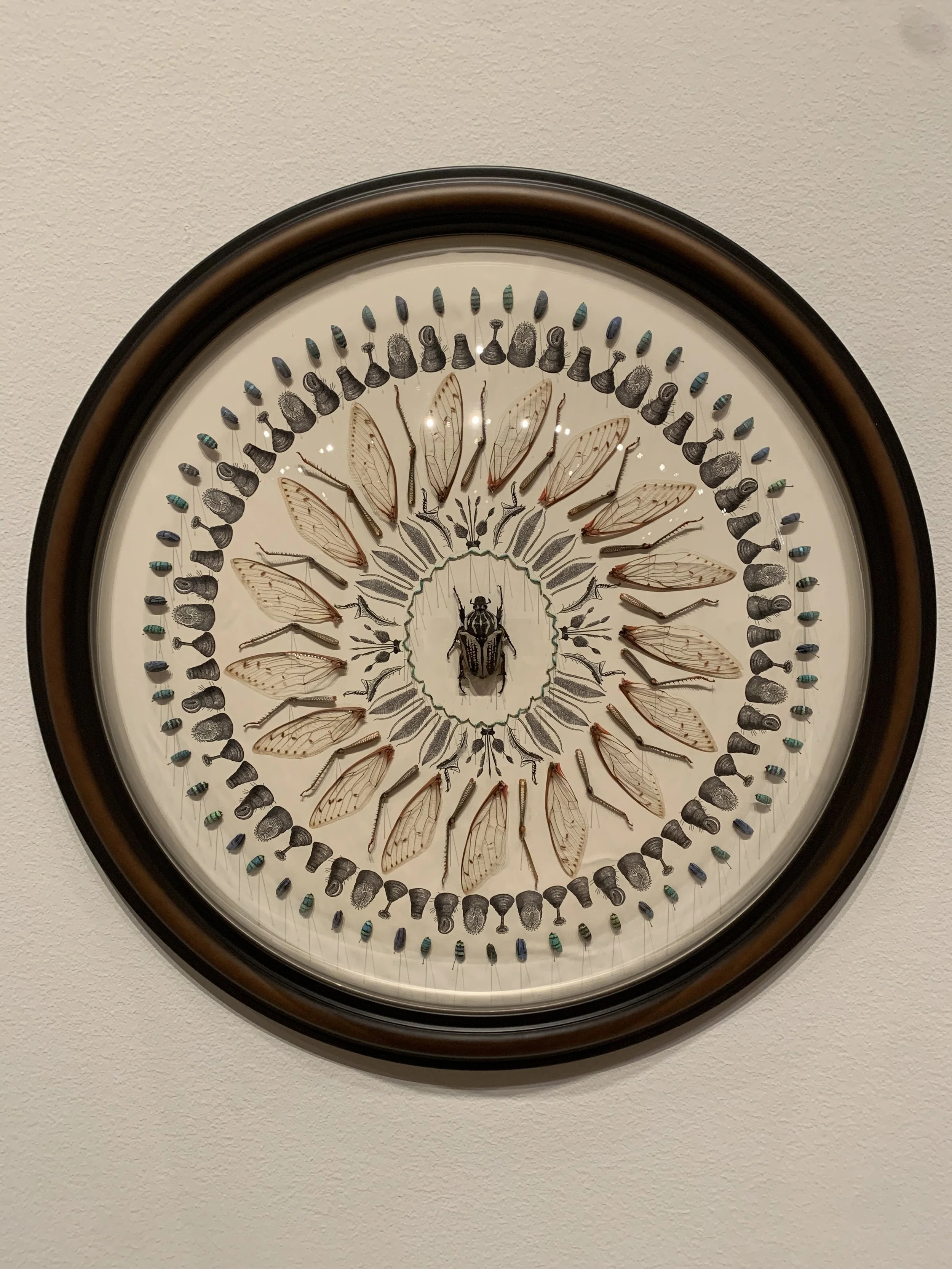
Jennifer Angus, Insect Anatomy, 2007
Photo by Connor Kipp
Sacrifices in art are also interesting to me. They are a central theme in this final display. There is a circular array of real insect parts all framed to create an elaborate dial. Wings, antennae, legs, and all sorts of other once-animated parts are used for this effect. Things that on their own would be considered grotesque turn into something that could be seen on the walls of an old bathhouse. This relays a message that, in making art, there are costs and sacrifices to be made. Whether it be materials, time, or even life, this tangible cost is what will separate actual, worthy art from that made by an AI engine. We’ve become so determined to speed up our way of life that we’ve lost some appreciation for taking our time to meticulously collect and arrange insect parts.
In this article, I gave special attention to only three pieces in the exhibit. It was never my intention to show off everything the collection has to offer; instead, I leave that up to the curious Madison residents to visit the Chazen for themselves and make their own assumptions about the art. This is a special offer to explore an art museum for free. There is no reason not to check it out, even if it is only for five minutes. If any of these pieces stood out to you, this hall will be open to the public until Dec. 23rd, 2026, so there is definitely enough time to explore all of the Chazen’s recollections.